

A fresh coat of paint can’t make worn, dirty, or damaged siding ready for a lasting finish. Exterior siding painting starts with the condition of the surface and the material it’s made from, so the right approach for wood may differ from the right approach for vinyl or fiber cement. It’s common to be unsure whether existing siding can be painted, especially when peeling, fading, or small repairs make the next step unclear.
A dependable result begins with careful preparation. Paint needs a clean, sound surface to adhere evenly and hold up over time. This guide explains how to assess whether siding is ready for paint, what cleaning and repairs may be needed, and how the material affects paint selection and application. It also covers the project sequence and how local weather can affect planning, so you know what to consider before exterior painting begins.
Key Takeaways
- Exterior siding painting can refresh existing siding when its condition supports a sound finish. Look for signs that may call for repair before painting.
- Follow a purposeful preparation sequence. Dirt, mildew, loose paint, and residue can weaken paint adhesion.
- Match paint selection to the siding material, whether it’s vinyl, wood, aluminum, or fiber cement, and follow the coating manufacturer’s directions.
- Plan application around suitable weather and product instructions, then inspect the finish for missed areas and other concerns.
- Virginia Power Washing And Painting Services paints exterior siding in Sterling and nearby Northern Virginia communities.
Exterior Siding Painting: When Is Painting a Sound Option?
Exterior siding painting means applying a coating that’s compatible with the existing siding. It can refresh a faded exterior, but appearance alone doesn’t determine whether painting is suitable. The siding material, surface condition, and ability to accept preparation all matter. A coating can renew color and create a consistent finish, but it can’t make unstable or deteriorating siding sound again.
Look beyond the overall color. Fading or an outdated shade may be mostly cosmetic, while peeling paint, loose sections, rot, soft spots, or visible cracks call for a closer assessment. Check the walls, including edges, joints, and areas exposed to moisture. This helps distinguish a surface that needs a new finish from one that may need repair first.
Siding is generally a stronger candidate for painting when it is stable, free of widespread damage, and able to accept a compatible coating after appropriate preparation.
The basic painting principles apply across many exterior surfaces, but the details depend on what’s being coated. For a broad overview of exterior painting, House painting techniques and considerations provides context on preparation and paint types. The siding itself remains the deciding factor: a product and process suited to one material may not suit another. Let coating compatibility and manufacturer instructions guide the work.
What siding conditions support a successful paint project?
Sound, stable siding gives a paint project a more dependable starting point than material that is breaking down. Look for panels or boards that remain firmly in place and surfaces without widespread peeling, rot, or visible damage. Even a small area of failing paint deserves attention because loose coating can affect the finish nearby. Painting improves appearance, but it doesn’t repair damaged siding or resolve an underlying problem.
Faded color alone doesn’t necessarily mean siding is failing. If the surface remains intact, painting may be a reasonable option once its material and preparation needs are considered. Loose sections or soft, deteriorated areas are different: they’re signs to pause and assess the condition before planning a coating.
When should homeowners consider repair or replacement instead?
When deterioration is widespread, painting may cover visible flaws without addressing the condition beneath them. An assessment can help determine whether affected sections can be stabilized or whether broader work is appropriate. The choice between painting and replacement depends on the extent and type of damage, as well as the siding material. Neither option is right for every home.
Before choosing a finish, make a practical condition check. Note where paint is peeling, identify loose or damaged areas, and distinguish faded surfaces from signs of material failure. That gives the project a sound starting point and keeps appearance goals aligned with the siding’s actual needs.
How Exterior Siding Painting Preparation Creates a Paint-Ready Surface
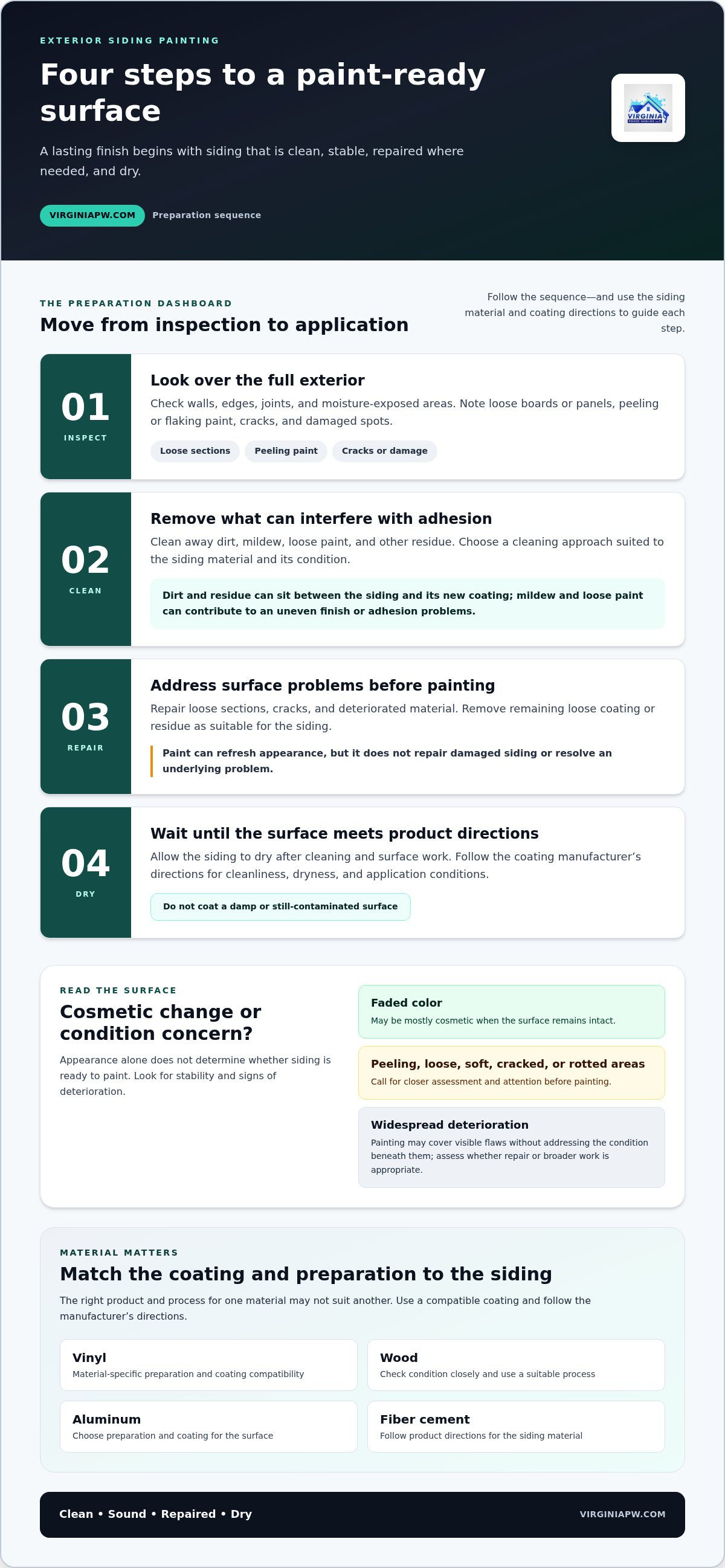
A reliable finish depends on more than covering the old color. Preparation gives paint a clean, stable surface to bond with and helps reveal issues that need attention before application. The general sequence is to inspect the siding, clean away contaminants, address surface problems, and allow the surface to dry as the coating instructions require. Details vary with the material and its condition, so no single cleaning or repair method fits every exterior.
Inspect and clean the siding before painting
Start by looking closely at the full exterior, not just the most visible wall. Check for loose boards or panels, peeling or flaking coatings, cracks, and areas that appear damaged or may need repair. Note where dirt, mildew, or other residue has collected, including around joints and in sheltered sections. This inspection helps identify preparation needs before paint is opened.
Cleaning removes material that can sit between the siding and its new coating. Dirt and surface residue can prevent even contact, while mildew and loose paint can contribute to an uneven finish or adhesion problems. Choose a cleaning approach that suits the siding rather than using the same setting or technique on every home. For related exterior cleaning guidance, see house washing in Sterling, VA.
Paint failure can have more than one cause, and the surface material matters. The National Park Service’s guide to common exterior paint problems and solutions discusses issues affecting painted woodwork, offering context for why sound preparation and material-specific care matter.
Allow repairs and drying before coating
Cleaning doesn’t take the place of repairs. If inspection reveals a loose section, a crack, or deteriorated material, address that condition before painting. Applying a coating over an unresolved problem can leave the surface unstable beneath the finish. The repair needs to suit the location and siding type.
After cleaning and any needed surface work, let the siding dry. Paint applied to a damp or still-contaminated surface may not adhere as intended. Read the coating manufacturer’s directions for cleanliness, dryness, and application conditions. Requirements can differ by product and surface.
Keep the preparation steps in order:
- Inspect the siding and note loose, failed, cracked, or damaged areas.
- Clean the surface using an approach appropriate for its material and condition.
- Complete necessary repairs and remove any remaining loose coating or residue as suitable.
- Allow the surface to dry and meet the coating’s preparation directions before painting.
This sequence helps prevent overlooked surface concerns from carrying into the finish. Virginia Power Washing And Painting Services paints exterior siding as part of its exterior painting work. Learn more about exterior painting services for homes in Sterling and nearby Northern Virginia communities.
How Siding Material Changes Exterior Paint Selection
The surface beneath the paint shapes both coating selection and preparation. Vinyl, wood, aluminum, and fiber cement each have different characteristics, so a coating that suits one siding type shouldn’t automatically be assumed to suit another. For exterior siding painting, identify the material and assess its current condition, then follow the siding and coating manufacturers’ instructions for compatibility and application.
Material-specific compatibility matters because paint must suit both the siding surface and its existing finish to adhere as intended.
| Siding material | Assessment focus | Selection considerations |
|---|---|---|
| Vinyl | Condition, surface cleanliness, and any existing coating | Use product and color guidance that addresses vinyl siding. |
| Wood | Moisture damage, deterioration, and failing paint | Choose a coating compatible with the wood and existing finish. |
| Aluminum | Surface condition and the state of any previous coating | Confirm that the coating is intended for the prepared surface. |
| Fiber cement | Condition, existing finish, and product instructions | Follow siding and coating manufacturer guidance for compatibility. |
Painting vinyl siding without overlooking its surface
Vinyl siding can be painted when its condition and a compatible coating make it a suitable candidate. Start with the siding itself: note damage, check for a previous finish, and confirm that the product directions address the surface. Color selection also deserves care. Vinyl manufacturers may provide guidance on suitable colors and coating compatibility, so use those instructions instead of relying on a blanket rule about acceptable colors. The right choice depends on the siding and product.
Wood, aluminum, and fiber-cement siding considerations
With wood siding, look for moisture damage, deterioration, or areas where the existing coating is failing. These conditions affect readiness and may need attention before painting. For aluminum siding, assess the surface and existing finish so the new coating is compatible with what’s already there. For fiber cement, check the condition and follow the siding and coating product instructions. Across all three materials, soundness and compatibility guide the decision, not a one-size-fits-all paint recommendation.
To make a practical selection, identify the siding, note its current finish, and record any areas of concern before comparing coating instructions. If the manufacturer’s directions don’t clearly apply to the material and surface condition, don’t assume a product intended for another siding type will perform the same way. Tying the choice to the actual surface helps keep the plan specific to the home.
Plan the Exterior Siding Painting Sequence Around Weather and Quality Checks
A well-planned exterior painting project follows a clear order, with weather and product directions shaping when each stage can proceed. For exterior siding painting, the sequence moves from assessing the surface to preparing it, applying a compatible coating, and reviewing the finished work. Use the paint label’s temperature and rain guidance to avoid starting under conditions the product isn’t designed for.
In Northern Virginia, check the forecast for the full period relevant to application and drying, not just the hours when painting is underway. Temperature, moisture, and expected rain can affect whether work can begin and how the coating is allowed to dry. Follow the selected product’s instructions for temperature limits, rain exposure, and drying conditions. Directions vary by product, so a general rule of thumb can’t replace the label.
Choose a suitable weather window for exterior painting
Before setting an application day, compare the forecast with the paint label. Cool or hot conditions, damp surfaces, and approaching rain may conflict with the product’s directions. If the forecast shifts, adjust the plan rather than assuming the coating will dry as expected. Account for the full application and drying guidance. A surface that looks dry doesn’t necessarily mean the product has reached the stage described on its label.
Keep the work sequence flexible. A suitable weather window may affect when prepared siding can be coated, so don’t treat a planned date as fixed if conditions change. The product instructions provide the practical reference for temperature and weather exposure; the forecast helps determine whether those conditions are likely to hold.
Review coverage and finish after application
Once the coating has been applied and can be reviewed according to its instructions, inspect the siding in steady light. Look for missed areas, uneven coverage, drips, or rough transitions where siding meets trim and other edges. A deliberate visual check helps catch small finish concerns while the project details are still fresh.
Touch-up needs depend on the siding surface, the coating, and its application directions. Follow the label for recoat or touch-up guidance instead of adding paint based only on appearance before the stated drying period. A visual inspection can identify visible coverage issues, but it can’t establish long-term durability on its own. That depends on the surface, preparation, product compatibility, and application conditions.
Use this order to keep the project organized:
- Assess the siding and identify any surface concerns that could affect the work.
- Complete the preparation appropriate to the material and allow the surface to meet product requirements.
- Check the forecast and paint-label guidance before applying the coating.
- Apply the coating as directed, then inspect coverage and transitions when appropriate.
Virginia Power Washing And Painting Services provides exterior painting for siding, fascia, soffits, trim, and doors in Sterling and nearby Northern Virginia communities. Plan your exterior painting project with the surface, product directions, and weather window in view.
Exterior Siding Painting in Northern Virginia: From Planning to Finished Work
Planning a siding project means bringing several details together: the material, the condition of the existing surface, the preparation it needs, and the weather window for applying paint. Those factors shape the work from the first assessment through the final visual review. A clear picture of the siding helps set practical expectations and keeps the plan focused on the home’s needs, not color alone.
Virginia Power Washing And Painting Services paints exterior siding in Sterling and nearby Northern Virginia communities, including Ashburn and Herndon. Its exterior painting work includes siding as well as fascia, soffits, trim, and doors, so these surfaces can be considered as part of a coordinated project.
What to have ready before planning siding painting
A few observations can make a project discussion more useful. Identify the siding material if you know it, note visible areas of concern, and consider what you want repainting to accomplish, such as refreshing a faded appearance or creating a new look. Be specific about peeling areas, loose sections, or known moisture concerns so the plan reflects the surface condition as well as the desired finish.
- Note the siding material and any known previous coating.
- Point out visible damage, peeling, or areas that may need closer assessment.
- Describe your repainting goals and any concerns about the existing finish.
These details don’t replace a surface assessment, but they help frame the work. If an area is damaged, the project plan should account for its condition before painting proceeds. Preparation, coating compatibility, and suitable weather all follow from that starting point.
Connect preparation guidance with a local painting project
For homeowners planning painting in Sterling, Ashburn, Herndon, Reston, or Leesburg, Virginia Power Washing And Painting Services offers residential exterior painting that includes siding. The siding material and surface condition are important considerations when planning the work. The business has a 5.0 Google rating from 85+ reviews, reflecting customer feedback without implying a particular result for every home.
Thoughtful planning also means letting the selected coating’s directions and the forecast guide application timing. This keeps the sequence grounded in the siding’s needs and the conditions at the home, rather than relying on a fixed schedule. For homeowners considering painting and power washing in Northern Virginia, planning around the property’s condition helps clarify how exterior cleaning and painting fit into its upkeep.
Review your home’s condition and goals, then explore Virginia Power Washing And Painting Services’ exterior painting services.
Start Your Siding Project with a Clear Plan
Turn what you’ve noticed about your home into a practical project plan. Note your siding material, the areas that need attention, and the finish you’d like to see. These details help shape an exterior siding painting project around the home rather than a one-size-fits-all approach. If you’re unsure how visible wear may affect the work, a surface assessment can help clarify the next steps.
Virginia Power Washing And Painting Services provides residential and commercial exterior painting in Sterling and nearby Northern Virginia communities, including Ashburn, Herndon, Reston, and Leesburg. The business has a 5.0 Google rating from 85+ reviews.
When you’re ready to plan, explore exterior painting services from Virginia Power Washing And Painting Services and take the next step toward a refreshed exterior.
Frequently Asked Questions
Can exterior siding be painted instead of replaced?
Yes, exterior siding can often be painted instead of replaced if it’s stable and the surface can accept a compatible coating. Painting may suit siding that mainly needs a visual refresh, while widespread deterioration or damaged sections call for a closer assessment before choosing a path. Intact boards with faded color, for example, are different from boards with soft spots or sections pulling away from the wall.
Do you need primer before painting exterior siding?
Primer isn’t required in every situation. The need depends on the siding material, existing finish, surface condition, and paint manufacturer’s directions. Bare or repaired areas may call for a different approach than previously painted siding in sound condition. Check the coating instructions for the specific surface rather than applying primer automatically, since the wrong preparation layer may not suit the selected paint system.
How many coats of paint does exterior siding need?
The required number of coats depends on the paint directions, siding surface, and coverage achieved by each application. A major color change or a surface that absorbs paint unevenly may need a different plan than a well-maintained surface receiving a similar shade. Follow the label’s coverage and recoat instructions, and assess each coat only after it has dried as directed.
Can you paint siding a darker color?
Often, yes, but check the siding manufacturer’s guidance before choosing a much darker shade, especially for vinyl. Darker colors can absorb more heat, and some siding products have specific color recommendations to help manage that concern. Confirm that the coating is compatible with the siding and that the proposed color follows product guidance. Don’t assume every dark paint is suitable for every exterior surface.
What happens if it rains after exterior siding is painted?
Rain before the coating has dried sufficiently may affect its appearance or performance. The risk depends on the product’s instructions and how soon the rain arrives, so check the label for rain exposure and drying guidance. If unexpected rain occurs, let the surface dry and assess it before attempting touch-ups. For homes in Sterling, Ashburn, Herndon, Reston, and Leesburg, use the forecast for the specific property when planning application.
How do you know when painted siding needs attention?
Look for peeling, blistering, cracking, fading, or areas where the underlying siding is exposed. These signs can appear first around joints, edges, or spots that receive more weather exposure. Chalky residue may also indicate that the finish is changing. A small, isolated issue may need a different response than coating failure across multiple walls, so note where the changes appear and how widespread they are.


