

The strongest spray isn’t automatically the best way to remove mildew from house siding. A forceful stream or unsuitable cleaner can damage siding, while marks that look like mildew may be algae or ordinary grime that needs a different approach.
Take care when cleaning your home’s exterior, especially near painted surfaces, landscaping, and areas that stay damp or shaded. A measured method suited to the siding can lift buildup without maximum pressure. Addressing the conditions that encourage growth can also help slow its return.
This guide explains how to distinguish mildew from other common stains, choose an approach for your siding, and protect nearby plants. You’ll also learn why growth can return in damp areas and when widespread, recurring, or hard-to-reach mildew makes professional house washing a practical next step.
Key Takeaways
- Dark spots and greenish or brownish patches may suggest mildew, but appearance alone can’t identify every siding stain.
- Choose a cleaning method based on the siding’s material, age, condition, and the cleaner’s directions, not on maximum pressure.
- Before you remove mildew from house siding, inspect the surface, protect nearby areas, and test your method on a small, inconspicuous spot.
- Where practical, reduce repeated wetting and improve airflow to address conditions that can encourage mildew to return.
- Widespread, recurring, fragile, or hard-to-reach growth may be better suited to professional house washing.
How to Identify Mildew on House Siding and Understand Why It Grows
Mildew is a type of fungus that can grow on damp exterior surfaces and leave visible discoloration on siding. Before trying to remove mildew from house siding, note what the marks look like and where they appear. This simple inspection can help you choose a suitable cleaning method instead of treating every stain as the same problem.
Dark specks or greenish and brownish patches may be mildew, particularly where siding stays shaded or wet. But color alone doesn’t confirm the cause. Dirt, algae, and other buildup can look similar, and a stain may have more than one cause. The general description of Mildew explains common appearances and growth habits, but looking at siding isn’t a definitive diagnosis.
What mildew on siding can look like
Look for irregular patches, but don’t assume every mark is mildew. Growth may be more noticeable on shaded walls, beneath eaves, near downspouts, or behind objects that limit sunlight and airflow. Dirt can collect in corners or splash onto lower siding, while algae may leave greenish discoloration. These patterns are useful clues, not a final identification.
- Notice whether marks appear as scattered dark spots or broader greenish or brownish patches.
- Compare the affected area with nearby siding that gets more sun and airflow.
- Check whether discoloration is concentrated near soil, drainage paths, or surfaces that stay wet.
A cluster of stains on a damp, shaded wall makes moisture-related growth more plausible, but it doesn’t confirm the exact cause. If discoloration remains after suitable gentle cleaning or appears to be part of the siding itself, don’t scrub harder just to force a result. The surface condition matters as much as the stain’s appearance.
Why siding stays damp enough for growth
Shade slows drying, and limited airflow can keep moisture close to a wall. Rain runoff, a sprinkler aimed at the house, or water collecting near the foundation can repeatedly wet siding. Dense shrubs close to the wall may also restrict airflow and hold moisture against the surface.
Walk around the home and note where water lands, drains, or lingers. Look for branches or shrubs crowding the wall, sprinkler spray reaching the siding, and drainage patterns that repeatedly wet one area. You don’t need to diagnose a hidden building problem to identify these everyday conditions. They can point to practical steps to take after cleaning.
Cleaning can refresh the visible surface, but mildew may return if the area remains damp and shaded. Where practical, trim vegetation away from the wall, redirect sprinklers, and keep drainage paths clear so siding can dry more readily. If one patch keeps returning despite these changes, look more closely at the cause rather than simply applying stronger cleaner.
Choose a Siding-Safe Mildew Cleaning Approach Before You Start
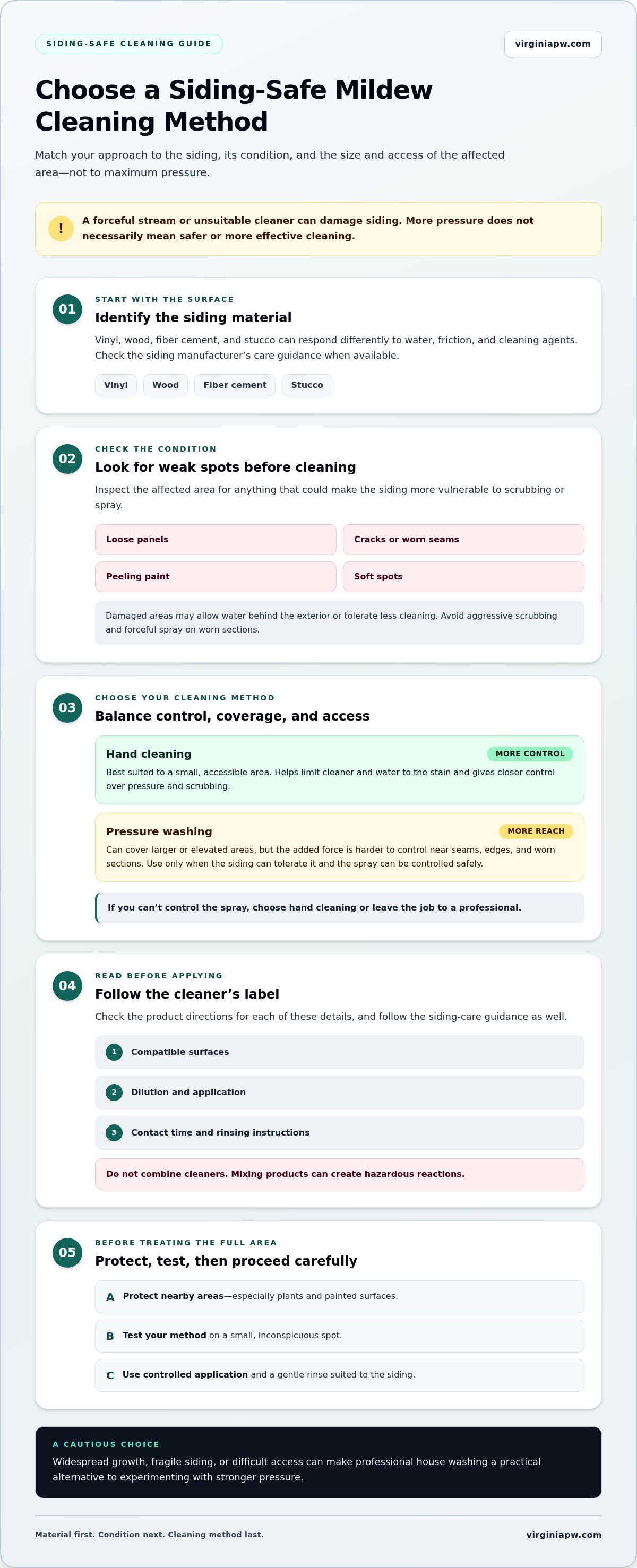
Choose a cleaning method only after identifying the siding material and checking its condition. Hand cleaning gives you close control over a small, accessible area and helps limit cleaner and water to the stain. Pressure washing can cover larger surfaces and reach higher areas, but the added force can be harder to control near seams, edges, and worn sections.
No single cleaner or technique suits every exterior. Vinyl, wood, fiber cement, and stucco can respond differently to water, friction, and cleaning agents. Age and wear can also make a surface more vulnerable. To remove mildew from house siding without avoidable damage, match the method to the material and follow the siding manufacturer’s care guidance and the cleaner’s label.
How siding material changes the cleaning decision
Identify the siding type, then check for loose panels, cracks, peeling paint, soft spots, or worn seams. Damage can allow water behind the exterior or make the surface less able to tolerate scrubbing. If manufacturer care instructions are available, use them to guide your choice of cleaner, brush, and rinsing method. When you’re unsure of the material or its condition, use extra caution rather than assuming it can handle forceful cleaning.
- Sound, accessible areas: Hand cleaning gives you more control over pressure and scrubbing.
- Large or elevated areas: A washer may improve reach, but use it only if the siding can tolerate it and you can control the spray safely.
- Worn or damaged sections: Avoid aggressive scrubbing or forceful spray that could worsen existing weaknesses.
When pressure washing may create unnecessary risk
A concentrated spray can damage siding or drive water behind it, particularly around seams, openings, and damaged spots. More pressure doesn’t necessarily mean safer or more effective cleaning. A controlled application and gentle rinse from a suitable distance can reduce direct force, though the right setup depends on the siding and equipment. Follow the washer’s instructions and the siding-care guidance. If you can’t control the spray, choose hand cleaning or leave the job to a professional.
Choose cleaner with the same care. Read the product label for compatible surfaces, dilution, application, contact time, and rinsing instructions. Don’t combine cleaners, even if they seem harmless when used separately. Mixing products can create hazardous reactions, and a homemade formula that works on one material may discolor or harm another. The EPA Mold Resources offers broader guidance on mold and cleanup, but the siding and cleaner instructions should guide your specific approach.
If growth covers a broad area, the siding is fragile, or access is difficult, professional house washing can be a practical alternative to experimenting with stronger pressure. Virginia Power Washing And Painting Services provides professional house washing to address dirt, mold, and mildew on home exteriors and refresh their appearance.
How to Remove Mildew From House Siding: A Careful Step-by-Step Process
A steady process helps you clean siding without rushing into stronger pressure or repeated scrubbing. Start with an inspection and a small test area. Work in manageable sections, follow the cleaner’s label, and stop if the siding changes appearance or seems damaged.
- Inspect the surface. Check the affected siding and nearby seams for loose panels, cracks, peeling paint, or other damage. Don’t direct water into openings or clean areas that appear too fragile to handle safely.
- Protect the surroundings. Move outdoor items out of the work area or cover them as appropriate. Account for nearby plants, and keep people and pets away while you’re cleaning.
- Prepare the work area. Close nearby windows and doors, gather supplies recommended for your chosen method, and wear the personal protection specified on the cleaner label. Keep the label available while you work.
- Test a hidden spot. Apply the cleaner and use your intended method on a small, inconspicuous area. Follow the label, then check for discoloration, damage, or another unwanted change before continuing.
- Apply cleaner as directed. Treat a manageable section using only the labeled dilution and application method. Follow the stated contact time, and don’t let the product dry on the siding if its directions say to keep it wet.
- Clean gently and rinse. If the siding and product instructions allow brushing, use a soft brush with light pressure rather than scraping or forcing the growth off. Rinse as directed, taking care around seams and edges so you don’t drive water behind the siding.
- Let the surface dry, then reassess. Check the cleaned area after it dries. If staining remains, review the label and test results before repeating treatment. Don’t automatically increase pressure or cleaner strength.
Prepare the area and protect nearby surfaces
Preparation helps keep a small cleaning job from affecting surrounding surfaces. Cover or move items that could be splashed, and protect plants according to the cleaner’s directions. Never combine cleaning products or add another product to a mixture. If the test spot reacts poorly, or you find loose or cracked siding, pause instead of treating the full wall.
Apply, clean, rinse, and inspect the siding
Use short, controlled passes so you can monitor the surface and follow the product label. Don’t scrub harder just because a mark remains during application. Some discoloration may not be mildew, and aggressive friction can harm siding. The FEMA Mold Guidance provides broader information about mold cleanup and prevention. For this job, follow the cleaner label and siding-care guidance.
Once the siding is dry, compare the treated spot with the surrounding area. If growth covers a broad section, returns quickly, or is difficult to reach safely, professional house washing can refresh the exterior without guesswork with household tools.
Prevent Mildew From Returning and Know When a Stain Needs More Attention
Cleaning can clear visible growth, but it doesn’t change the damp or shaded conditions that allowed it to develop. After you remove mildew from house siding, look beyond the cleaned patch and consider what keeps that section wet. Recurring growth often points to persistent moisture or limited airflow, so prevention starts with observing the wall and its surroundings.
Reduce the moisture and shade conditions that encourage regrowth
Trim shrubs or branches that press against the siding or block airflow, while preserving the plants and screening you want around your home. Check whether sprinklers spray the wall, and adjust their direction if they repeatedly wet it. Notice where roof or ground drainage leaves water near the exterior, too. These checks can guide routine maintenance without requiring you to remove useful landscaping.
In Northern Virginia, homes in Sterling, Ashburn, Herndon, Reston, Leesburg, and nearby communities can have different exposures depending on their layout and landscaping. Let the affected wall guide your attention. A shaded side that dries slowly may need more care than a sunny, open wall, while a recurring wet patch may call for checking the water source before cleaning again.
- Trim vegetation that crowds the wall or noticeably restricts airflow.
- Redirect sprinkler spray that regularly reaches the siding.
- Keep drainage paths clear and observe where water collects or runs down the exterior.
Recognize when a mark needs reassessment
After the siding dries, compare the area with how it looked before cleaning. Some discoloration may remain even after visible growth is removed, and a lingering mark doesn’t by itself prove mildew is still active. Don’t repeat treatment automatically or increase pressure just to make every trace disappear. Reassess whether the mark has changed, whether growth returns, and whether the area continues to stay damp.
If the same patch reappears, review the conditions around it and consider whether water repeatedly reaches that section. A persistent stain may have another cause, while quick recurrence can mean cleaning alone isn’t addressing the problem. Note the location, whether it is shaded, and any visible wetting or drainage pattern.
Stop DIY cleaning if the siding appears loose, cracked, or otherwise damaged, or if reaching the area would put you at risk. Repeated scrubbing and stronger spray can make a vulnerable surface worse. For broad or persistent exterior growth, professional house washing can address dirt, mold, and mildew while refreshing the siding. Arrange professional house washing when the job is difficult to handle safely on your own.
When Northern Virginia House Siding Needs Professional Mildew Washing
DIY cleaning can make sense for a small, accessible patch on siding in sound condition. The decision changes when growth covers several walls, keeps returning, or is somewhere you can’t reach safely. If you want to remove mildew from house siding but aren’t confident your tools or cleaner are suitable for the material, professional house washing offers a practical way to care for the exterior without using a risky approach.
Signs that professional house washing may be the practical next step
Consider the size of the job before starting another round of cleaning. A few marks in one reachable area are different from widespread growth across multiple sides of the home. Also consider the siding’s condition and whether earlier cleaning helped. If the surface looks fragile or growth returns, more pressure or stronger products may not be the answer.
- Growth spans several walls or covers a broad section of siding.
- The affected area is elevated, awkward to reach, or unsafe to work on from the ground.
- Siding is loose, cracked, aging, or otherwise vulnerable to scrubbing or spray.
- Marks return after cleaning, or a stain remains and its cause is uncertain.
These are reasons to pause and reassess, not proof that every remaining mark is mildew or that washing will resolve every surface issue. If the siding is damaged, address that concern rather than treating it as a cleaning problem. A measured decision helps protect the exterior and avoids repeating a method that hasn’t worked.
How local house washing supports routine exterior care
Residential house washing addresses dirt, mold, and mildew on home exteriors, helping refresh siding and curb appeal as part of regular property care. The right next step depends on the home’s surfaces, the extent of visible buildup, and whether access is manageable. Professional washing can be useful when a homeowner would otherwise need to clean a large area or reach difficult sections alone.
Virginia Power Washing And Painting Services provides house washing in Sterling, Ashburn, Herndon, Reston, Leesburg, and nearby Northern Virginia communities. For homeowners in these areas, local service is a practical option when exterior buildup is widespread, persistent, or difficult to address safely. It can also refresh siding without assuming that every stain has the same cause or needs the same treatment.
When DIY cleaning no longer feels like a careful fit for the scope or condition of your siding, explore house washing in Sterling and nearby areas as a practical next step for exterior maintenance.
Give Your Siding a Careful Fresh Start
Exterior care works best when it protects the surface as well as its appearance. If you’re deciding how to remove mildew from house siding, let the siding’s condition and the scale of the growth guide your next move. A small, accessible area may suit careful DIY cleaning, while a broader or hard-to-reach job can be easier to manage with professional house washing.
Virginia Power Washing And Painting Services has a 5.0 Google rating from 85+ reviews. Its residential house washing addresses dirt, mold, and mildew to help refresh your home’s exterior and curb appeal. Choose an approach suited to your property rather than pushing a method that could cause avoidable wear.
For help refreshing your home’s exterior, explore house washing for your home. Thoughtful maintenance can help keep siding looking cared for and your home welcoming.
Frequently Asked Questions
Can I remove mildew from house siding without a pressure washer?
Yes. For a small, reachable patch, use a soft cloth or brush with a cleaner labeled for your siding, following its application and rinsing directions. Hand cleaning gives you close control and avoids directing a forceful spray at seams. Don’t use a ladder while handling cleaning tools or liquids unless you can do so safely. Leave difficult or elevated areas to a professional.
Is mildew on siding different from algae or ordinary dirt?
Yes, but their colors and patterns can overlap on an exterior wall. Dirt may collect along lower edges or splash zones, while organic growth can appear in damp or shaded areas. These are clues, not a certain diagnosis. Note the mark’s location and how it changes after gentle cleaning, and avoid scrubbing harder just because a stain remains.
Can household bleach damage house siding or nearby plants?
It can. Chlorine bleach may discolor painted or fiber-cement siding, and splashes or runoff may harm nearby plants. Don’t assume a household bleach mixture is safe for your surface. Choose a product labeled for the siding, follow its directions, protect nearby landscaping as instructed, and never mix bleach with other cleaners. Test any product on a small, inconspicuous spot before using it more broadly.
How long does it take to remove mildew from house siding?
There’s no single timeframe. A small patch may take less time than buildup across several walls, and preparation, access, rinsing, and the cleaner’s required contact time all affect the job. Follow the product label rather than shortening its contact time or letting it dry if the directions say otherwise. Allow time to inspect the siding after it dries, since remaining discoloration may need reassessment.
Is it safe to clean siding during cold or rainy weather?
It’s usually better to wait for suitable, dry conditions. Rain can wash cleaner off before it has worked as directed, while cold weather may affect product use and make wet surfaces slippery. Check the cleaner label for temperature and weather limitations, and avoid working if rain is likely during application or rinsing. Postpone the job if conditions prevent safe footing or proper rinsing.
Will cleaning mildew restore faded or permanently stained siding?
Not necessarily. Washing can remove surface dirt and growth, but it can’t restore color lost through age or sun exposure, and some stains may remain for reasons unrelated to mildew. Let the siding dry before judging the result, and don’t keep applying cleaner or increasing pressure to chase a mark. If the finish looks faded, peeling, or damaged, cleaning alone may not address the underlying condition.
How often should house siding be cleaned?
There isn’t one schedule that fits every home. In Sterling, Ashburn, Herndon, Reston, Leesburg, and nearby communities, exposure varies with shade, landscaping, and how often siding gets wet. Inspect the exterior periodically and clean when visible buildup warrants it, rather than using strong methods on a fixed routine. Keeping shrubs from crowding walls and watching for repeated wetting can help you decide when another cleaning is needed.

